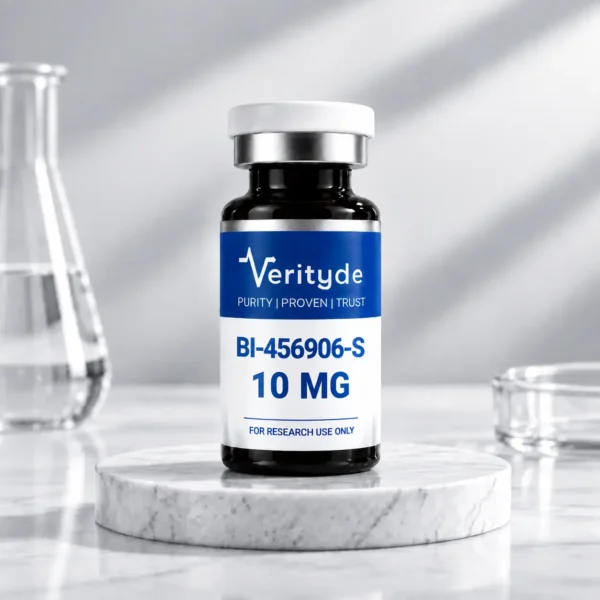
BI-456906-S 10MG
In stock
$109.99
Quantity discounts

Product Description
BI 456906-S (Survodutide)
Product Overview
BI 456906, also known as survodutide, is an investigational synthetic peptide designed to activate both the glucagon-like peptide-1 receptor (GLP-1R) and the glucagon receptor (GCGR). It is a modified, long-acting peptide developed to investigate the complementary roles of these signaling pathways in energy balance, glucose regulation, and metabolic function.
Activation of GLP-1 receptors is associated with pathways involved in appetite regulation, food intake, and gastric emptying. Glucagon receptor activation influences energy expenditure and hepatic metabolic processes. By targeting both receptors, survodutide is being investigated for its potential role in metabolic research, including studies of obesity and metabolic dysfunction-associated steatohepatitis (MASH), formerly known as non-alcoholic steatohepatitis (NASH).
Preclinical studies have demonstrated activity at both receptors, while early-stage human clinical trials have examined safety, tolerability, pharmacokinetics, and metabolic outcomes. Survodutide remains investigational, and its clinical development findings should not be interpreted as establishing the safety or efficacy of research-grade products or unapproved formulations.
Key Research Areas
GLP-1 receptor and glucagon receptor signaling pathways
Appetite regulation, food intake, and energy balance research
Glucose homeostasis and metabolic regulation
Hepatic metabolism and liver-related research models
Dual-receptor agonism and peptide structure–activity relationships
Pharmacokinetics, peptide stability, and analytical characterization
Handling & Reconstitution
For laboratory use, reconstitute with Bacteriostatic Water (BAC) or sterile saline. After reconstitution, the solution should be stored at 2–8°C (36–46°F) and used within the appropriate experimental window to maintain peptide stability.
Additional information
| Size |
|---|